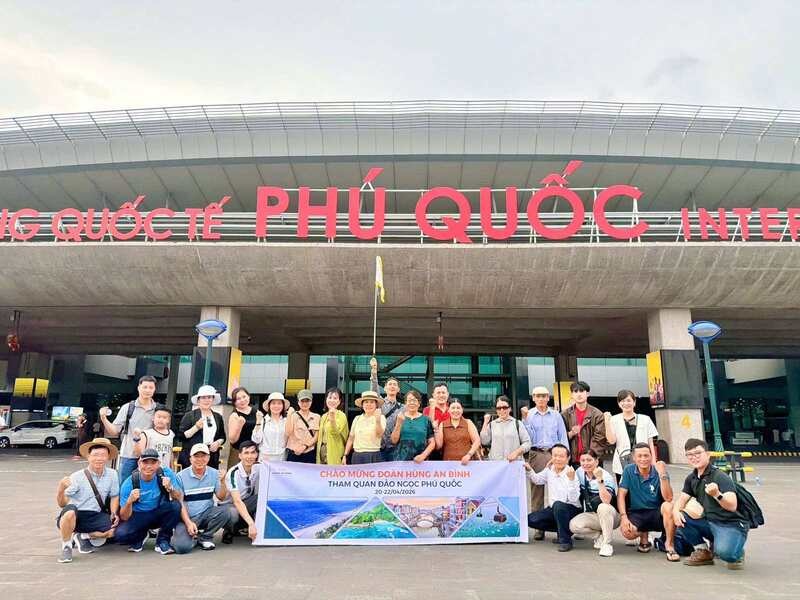



Effective corporate event organization requires not only a good idea but also a well-structured plan to control the budget and minimize unexpected risks. The corporate event organization checklist below, covering three stages before, during, and after the event, helps businesses proactively manage each task, coordinate with suppliers effectively, and ensure the guest experience. Together with Chiic Tourism , businesses can refer to a practical process to turn a plan into a well-executed program that stays aligned with its objectives while optimizing costs.
I. What should a corporate event organization checklist focus on?
An effective corporate event organization process needs to be controlled throughout the stages before, during, and after the program. The corporate event organization checklist below organizes key tasks for each stage, from defining objectives, budget, and venue to event operations, handling unexpected issues, and post-event evaluation.
1. Stage 1: Before the event
This is an important stage for controlling quality and budget. The clearer the plan, the easier it is for different teams to coordinate and minimize unexpected issues. Therefore, the corporate event organization checklist should be reviewed step by step before the event day. A structured corporate event organization process also helps teams identify gaps before they affect the actual program.
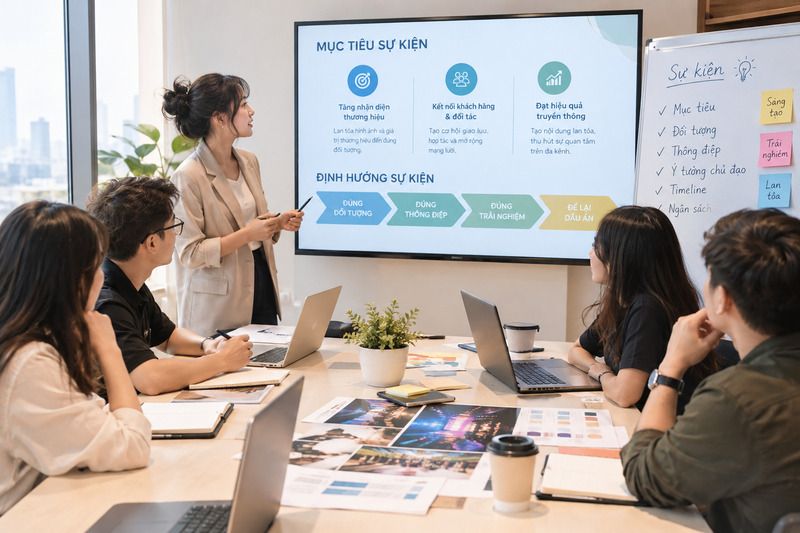
Define the event objectives
Businesses need to clearly define the objectives of the program, such as team engagement, customer appreciation, recognition, conferences, Gala Dinners, or Year End Parties. The clearer the objectives, the easier it is to determine the concept, content, and budget, while also providing a basis for evaluating the results after corporate event organization. Clear objectives also help businesses organizing events avoid investing in activities that do not support the main purpose of the program.
Define the target audience and number of guests
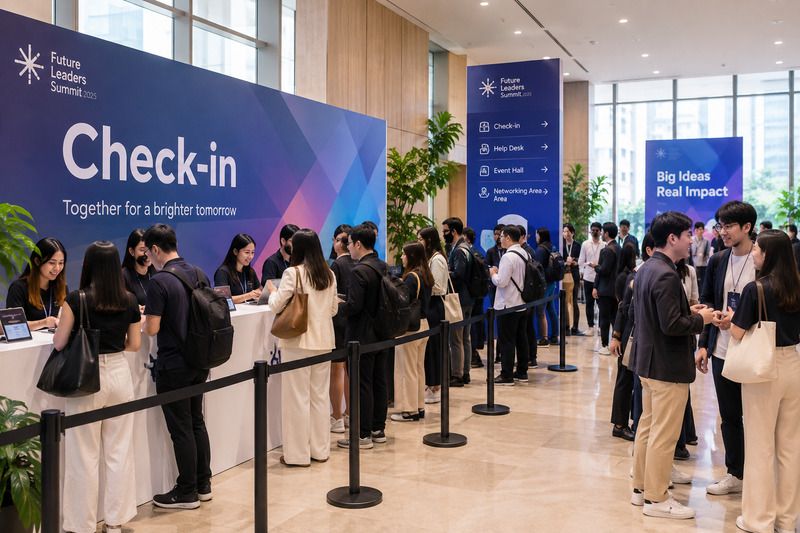
The guest list and number of attendees directly affect the venue, event space, and budget. Businesses should categorize guests and determine the number as accurately as possible, especially for programs with 50-500 guests. This provides a basis for preparing the seating plan, check-in, and suitable interactive activities within the corporate event organization checklist . For businesses organizing events , having an accurate guest profile also helps determine the appropriate event format and operational requirements.
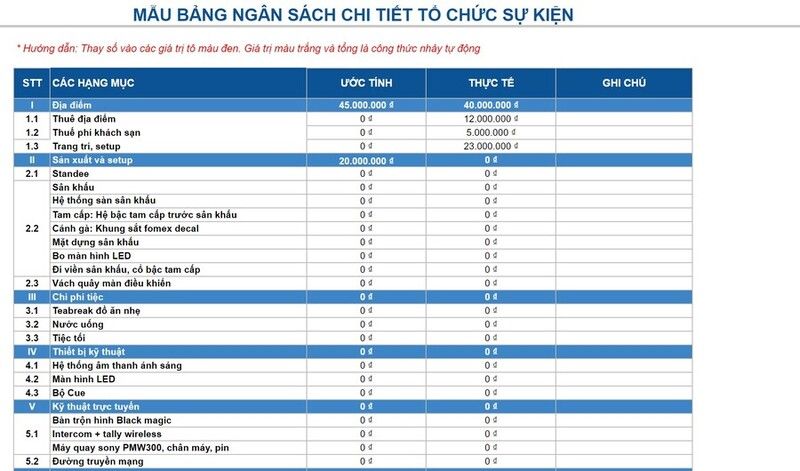
Prepare the event budget
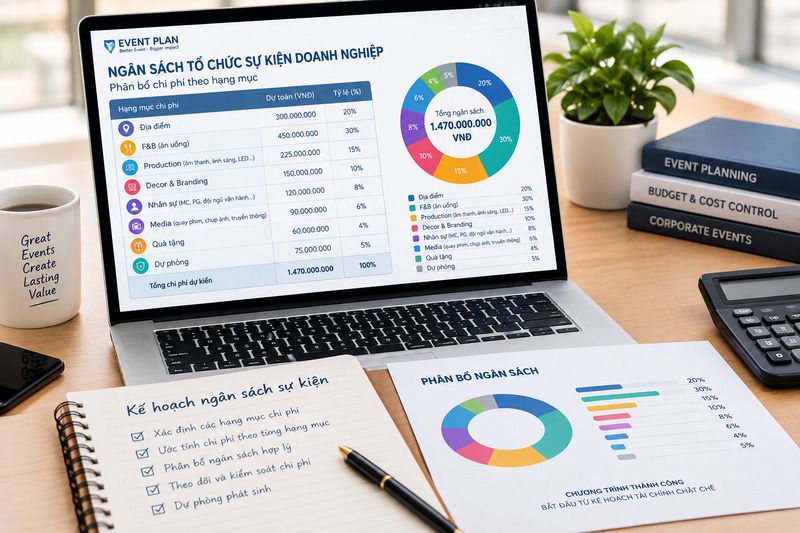
The budget should be divided into cost categories such as venue, F&B, production, décor, staffing, media, and gifts, along with a contingency fund. Within the corporate event organization process, this allocation makes it easier to control actual expenses and prioritize items that create direct value for attendees. These cost categories can also be reviewed in the corporate event organization checklist to keep budget planning consistent across the preparation stage.
Build an implementation timeline
The timeline should be divided into clear milestones to make progress easier to track:
6 - 8 weeks before the event: Finalize the event objectives, budget, venue, and overall concept.
4 - 6 weeks before the event: Confirm suppliers, the event script, communication content, and design materials.
2 - 3 weeks before the event: Finalize content and designs, and proceed with the production of printed materials, event items, backdrops, stage elements, gifts, and more.
1 week before the event: Check the progress of all items and confirm staff, guests, equipment, and operational plans.
1 - 2 days before the event: Set up the venue, conduct technical checks and run-throughs, and rehearse the entire program.
Onsite: Follow the timeline, assign staff to each area, and promptly handle any unexpected issues.
Each task should clearly specify the person in charge, completion deadline, and current status. When changes occur, related tasks should also be updated promptly to avoid overlaps or last-minute workload. This corporate event organization process makes it easier to identify dependencies between tasks and coordinate updates when the timeline changes.
Choose the event venue
The venue should be evaluated based on its capacity, location, parking, stage, technical areas, and setup conditions, rather than just its appearance or reputation. For professional indoor event organization, businesses should also check the ceiling height, sound, lighting, traffic flow, and safety conditions to ensure the concept can be properly executed.

Develop the event concept and message
The concept should be developed based on the event objectives and brand direction, creating a consistent connection between the message, stage, activities, and visual elements. This is an important item in the corporate event organization checklist .
Develop the program script
The event script should clearly outline the flow from check-in and opening to the closing, including timing and transition cues. This is an important item in the corporate event organization checklist , helping the program maintain a steady flow and making it easier to handle changes. It also gives businesses organizing events a shared reference during execution.

Select and manage suppliers
Suppliers should be evaluated based on their experience, scope of work, and ability to meet the timeline. Quotations should clearly specify the included items, additional costs, and responsibilities of each party. This is an important part of the corporate event organization checklist , helping minimize overlapping tasks and prevent work from being overlooked.
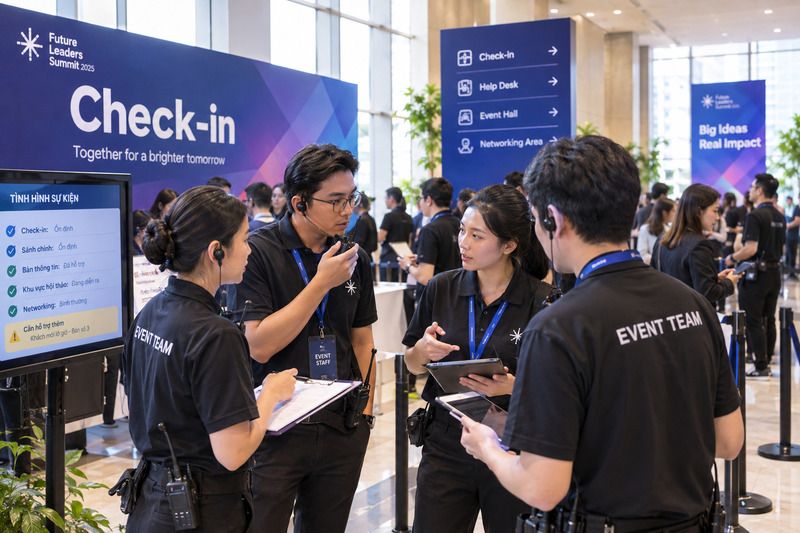
Prepare the guest plan
The guest list, invitations, RSVPs, seating plan, and VIP guests should be kept up to date throughout the process. The check-in area and gifts should also be prepared according to the corporate event organization checklist .
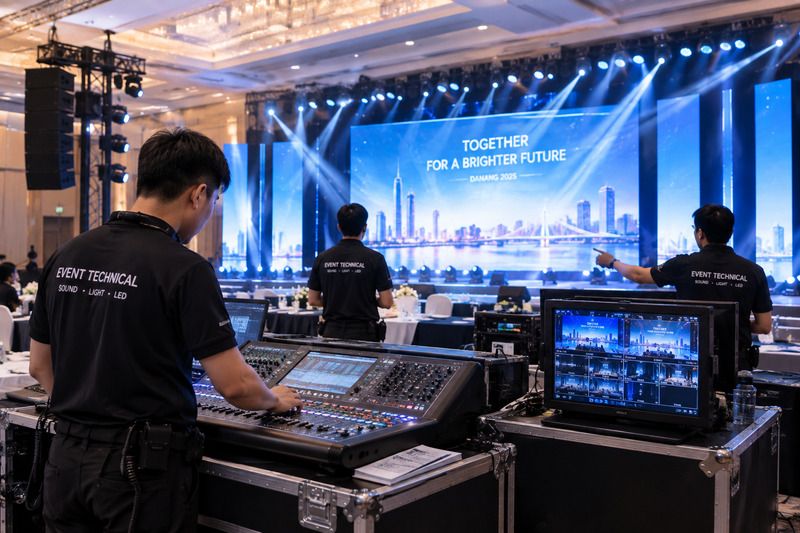
Check technical elements and rehearse
Before the event day, all equipment and technical cues should be checked against the event script. The MC, performers, and relevant teams should conduct a full rehearsal to minimize errors and disruptions. This is an important step to review carefully in the corporate event organization checklist . For professional indoor event organization , technical rehearsals help verify that the venue can support the planned setup.
2. Stage 2: During the event
Once the event begins, the team should closely monitor the setup, guests, timeline, and experience across each area. The corporate event organization checklist helps keep track of key tasks and identify issues early for timely resolution.
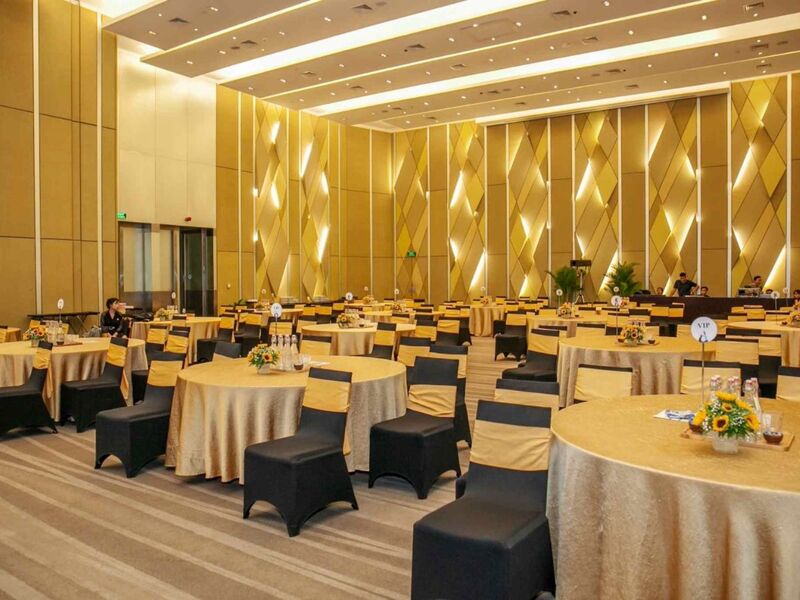
Check the setup before guest arrival
Before the doors open, the team should review the stage, tables and chairs, check-in area, branding, gifts, and technical equipment according to the corporate event organization checklist . A final check helps address any issues in time before guests arrive and the program begins.
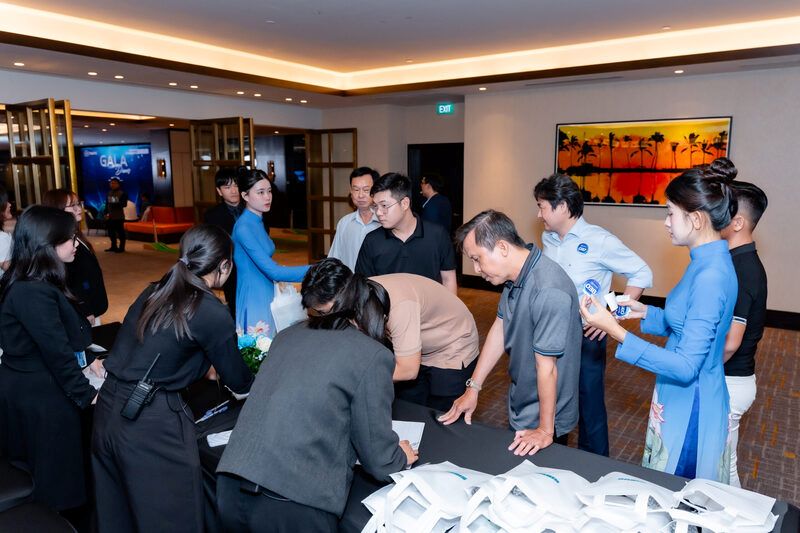
Coordinate guests and onsite personnel
Staff should be clearly assigned to each area, from check-in and technical support to the stage and VIP guest assistance. The corporate event organization checklist helps identify the responsible person for each task, ensuring that any issues are addressed promptly.
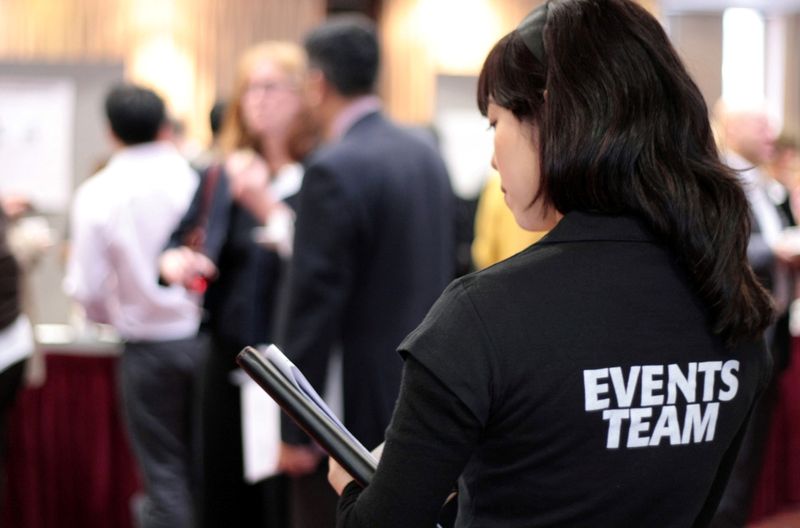
Control the program timeline
The timeline should be monitored throughout the event, with the coordinator providing timely updates to the MC, technical team, and performers. The corporate event organization checklist helps adjust timings flexibly, maintain a smooth flow, and ensure that all key content is covered.
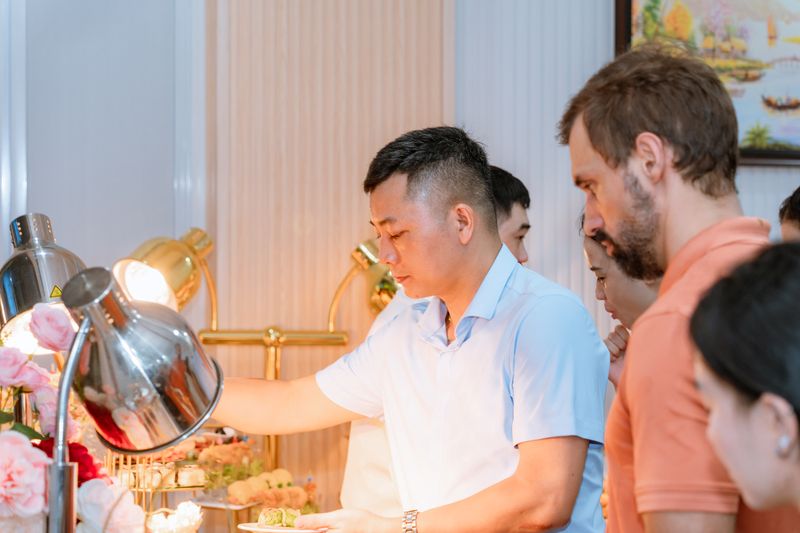
Monitor the guest experience
F&B, room temperature, seating, sound, and guest interaction should be closely monitored throughout corporate event organization. The onsite team should proactively identify and address issues early to ensure a positive guest experience.
Handle risks and unexpected issues
Businesses should prepare contingency plans for equipment failures, unexpected increases in attendance, timeline delays, or staffing changes. In the corporate event organization process, each situation should have a clearly assigned person in charge and a backup plan to minimize its impact on the program. This gives businesses organizing events a clearer response framework onsite.
3. Stage 3: After the event
The post-event stage helps businesses reconcile the budget, evaluate the objectives, and compile feedback and event photos. The corporate event organization checklist should also include a post-event review to identify lessons for future programs.
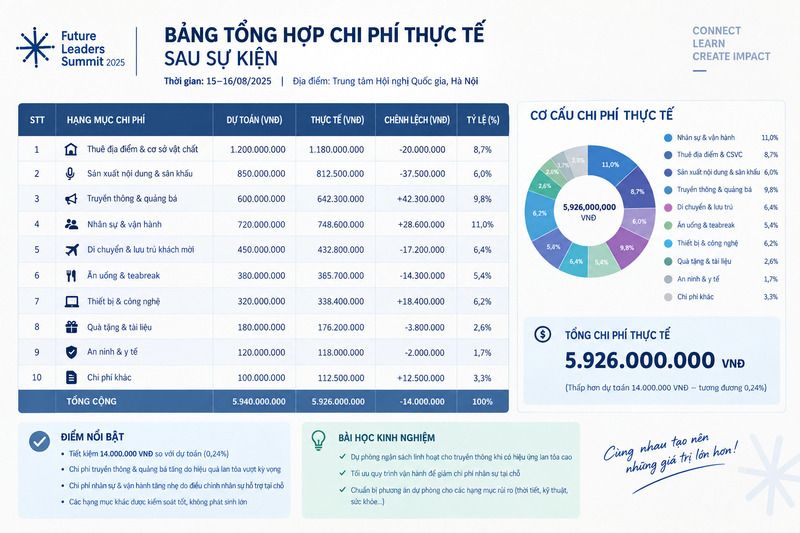
Reconcile actual costs
After the event, businesses should compare the planned budget with actual expenses and record any additional costs for each item. This data helps businesses organizing events evaluate their ability to control the budget and provides a basis for future programs.
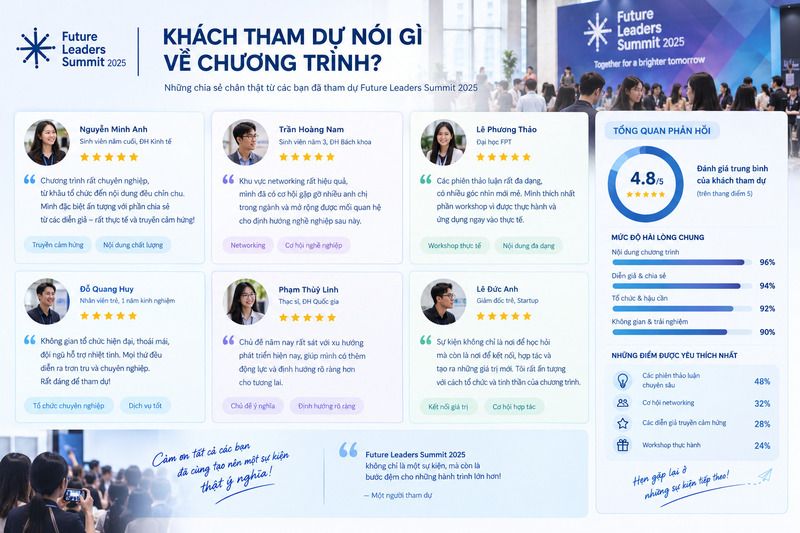
Collect attendee feedback
Feedback can be collected through surveys, direct conversations, or internal channels, focusing on the program content, venue, F&B, and overall experience. Within the corporate event organization process, businesses should prioritize issues that occur repeatedly and have a clear impact on the guest experience.
Evaluate event KPIs
KPIs should be defined based on the initial objectives, covering attendance, engagement, satisfaction, and reach. Within the corporate event organization process, tracking the right metrics helps evaluate performance based on specific results.

Compile images and communication content
Photos and videos can be used for event recaps, internal communications, branding, or recruitment. This is an item that should be included in the corporate event organization checklist so that post-event materials can continue to create value.

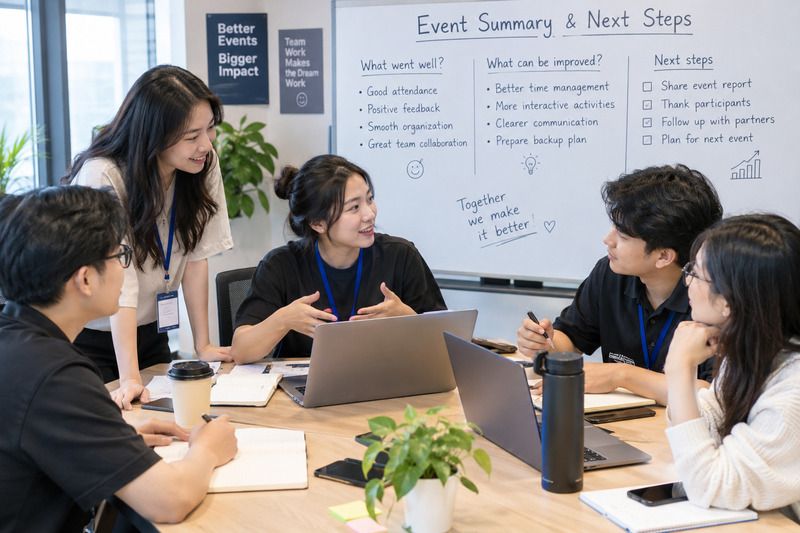
Draw lessons for the next event
Businesses should summarize what worked well, the issues that arose, and their causes as a basis for future programs. Keeping these records helps businesses organizing events optimize the process and improve quality with each program.
II. Chiic Tourism – Full-service corporate event organization company
1. Design programs based on objectives and budget
Chiic Tourism starts with the specific objectives of each program. These may include team engagement, customer appreciation, partner recognition, or conference organization. Based on these objectives, the program is developed according to the actual group size and budget.
The event organization specialists at Chiic Tourism can flexibly handle groups of 50 to 500 guests, meeting the specific needs of businesses organizing events . This allows specialized event organization to follow each program’s actual requirements.
2. From concept to program script and event visuals
Chiic Tourism develops the concept and maintains consistency across the event script, stage, activities, and visual elements. This is also an important part of the corporate event organization checklist , helping ensure consistency across the event space and communication content
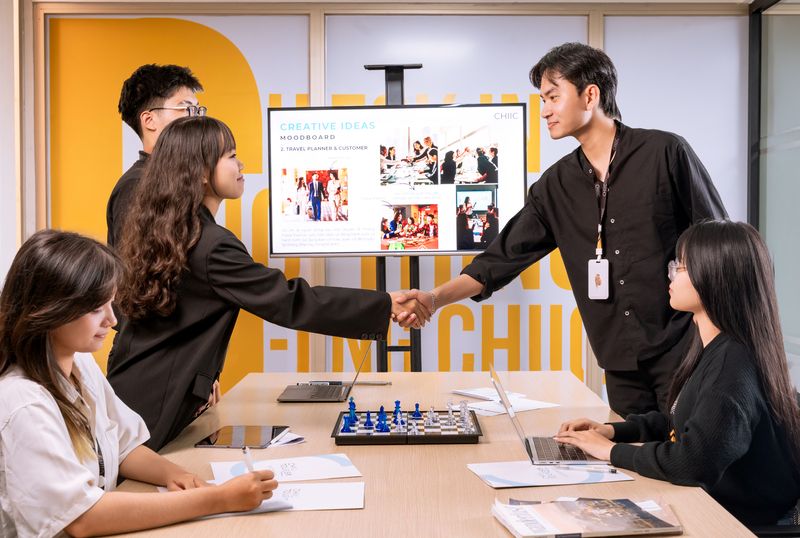
3. One point of contact for the entire program
Chiic Tourism accompanies businesses throughout the process, from ideas and planning to preparation and event operations, with a single point of coordination from start to finish. The team provides advice on venues, accommodation, F&B, staging, technical production, and logistics based on the scale, budget, and objectives of corporate event organization .
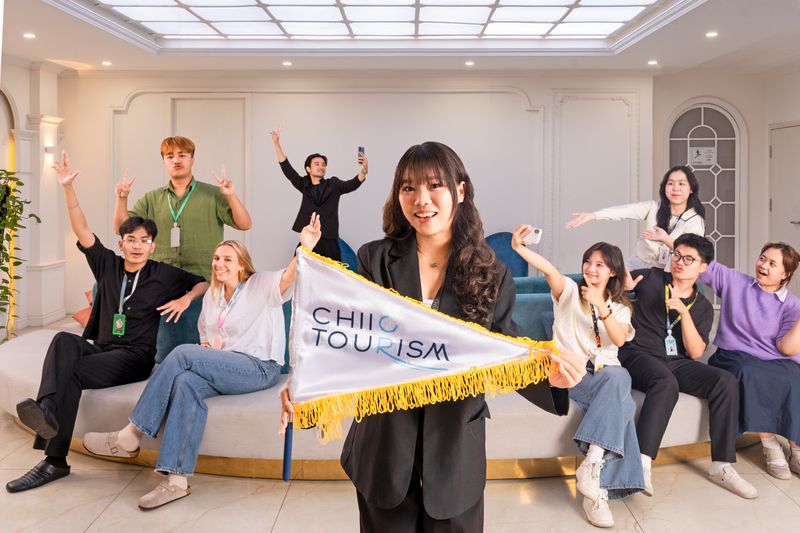
4. Combine events into a complete MICE program
Instead of organizing each activity separately, Chiic Tourism can combine conferences, team building, Gala Dinners, and company trips into one cohesive journey. The activities are designed around a shared flow, addressing both business objectives and the overall experience.
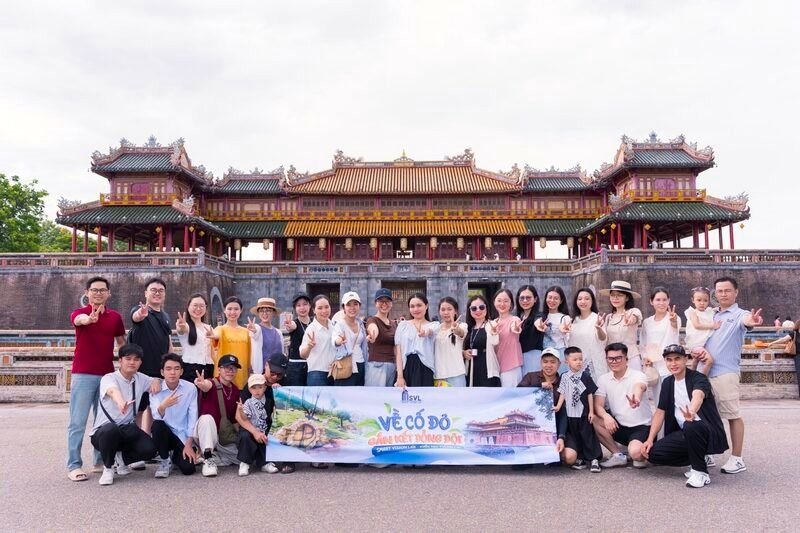
5. Closely monitor and manage the program onsite
The Chiic Tourism team closely oversees the setup, rehearsals, and event operations while coordinating the timeline, technical team, suppliers, and staff. With the corporate event organization checklist , each item is monitored according to the plan and handled promptly when changes arise.

III. FAQs - Frequently Asked Questions About Corporate Event Organization
1. How can businesses optimize costs when organizing corporate events?
Businesses should define the objectives, number of guests, and budget from the start. Next, priority should be given to items that add value to the program, along with a contingency budget for unexpected costs. A clear corporate event organization checklist also helps minimize unplanned expenses.
2. How far in advance should businesses prepare for an event?
The preparation timeline depends on the scale and type of corporate event organization . For programs involving multiple components such as conferences, team building, or Gala Dinners, businesses should plan early to secure the venue, suppliers, event script, and budget.
3. What types of corporate events does Chiic Tourism organize?
Chiic Tourism specializes in event organization for conferences and seminars, Gala Dinners, Year End Parties, MICE combined with team building, customer and partner appreciation events, and Incentive Travel. Each program is designed around the specific objectives of each business.

4. What should businesses consider when organizing indoor events?
For professional indoor event organization, businesses need to check the venue capacity and space, as well as the sound, lighting, screen systems, ceiling height, stage area, and guest flow. These factors help businesses organizing events stay proactive during operations and minimize additional costs. A detailed corporate event organization checklist keeps these checks organized.
IV. Conclusion
The above corporate event organization checklist helps businesses manage tasks, budgets, and risks throughout the event. With experience in delivering comprehensive event services across various formats and requirements, Chiic Tourism accompanies businesses from concept to execution, developing programs that align with their objectives and budgets. Contact Chiic Tourism today to start planning the next corporate event.
————————
CHIIC TOURISM
Contact information:
Địa chỉ: 216 – 2018 Trần Hưng Đạo, Sơn Trà, Đà Nẵng, Việt Nam
Hotline: +84 (0) 912 614 411
Gmail: travel@chiicworld.com
Website: www.chiicworld.com
Fanpage: https://facebook.com/chiictourism